The escort industry in Russia doesn’t look like what you see in movies or on Western social media. It’s not about flashy cars and luxury hotels in every city. Instead, it’s quietly woven into the everyday rhythms of urban life-hidden in plain sight, operating under layers of social caution and legal ambiguity. Unlike in places like Paris, where the scene is more openly discussed and sometimes regulated, Russia’s escort economy thrives in the spaces between compliance and concealment. You won’t find billboards or public listings. But if you know where to look, you’ll find networks tied to specific neighborhoods, private apartments, and discreet online platforms that function more like local classifieds than global marketplaces.
Some people searching for companionship in Moscow or St. Petersburg end up on sites like escorté paris, not because they want to go to France, but because those platforms offer a template of how discreet, professional services can be presented online. The structure is familiar: photos, brief bios, availability filters. But in Russia, the tone is different. There’s less glamour, more practicality. Profiles often avoid overt sexual language. They emphasize companionship, conversation, or even cultural exchange. This isn’t just about avoiding police attention-it’s about managing reputation in a society where stigma still runs deep.
How Escort Parks Function in Russian Cities
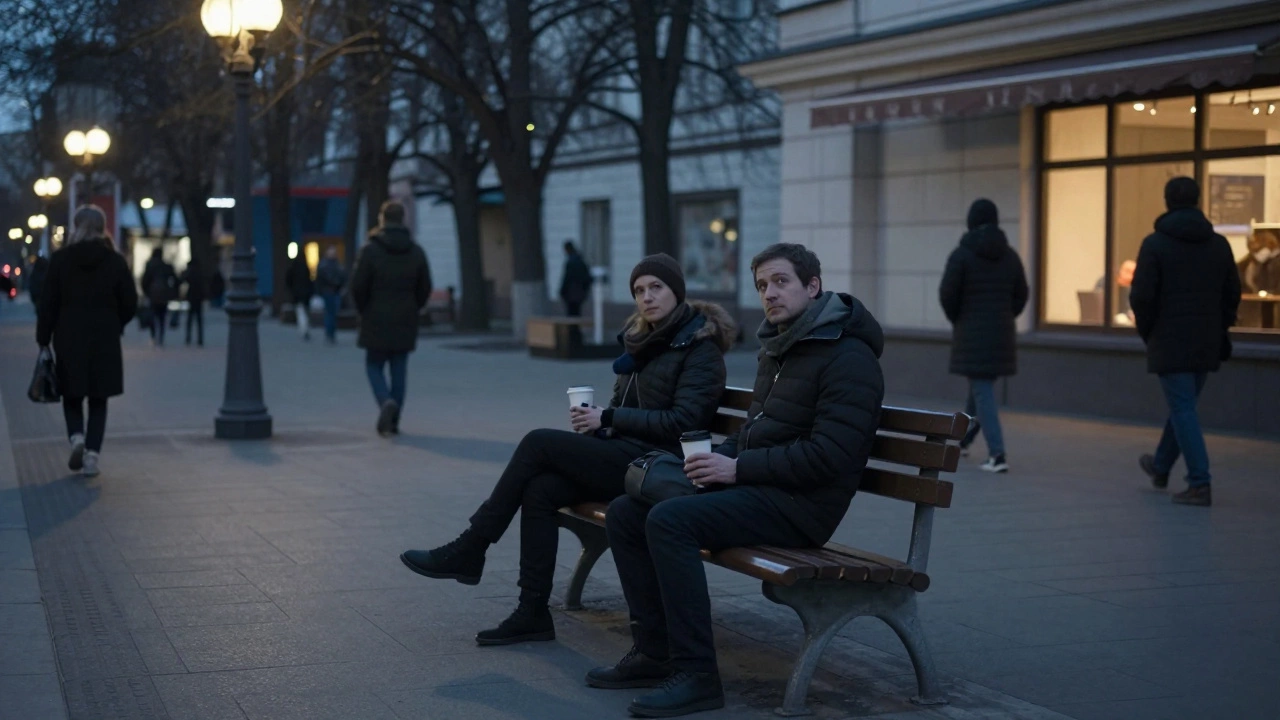
The term "escort parks" might sound like a tourist attraction, but in Russian cities, it’s street slang for specific public areas where informal arrangements are made. These aren’t official zones. They’re places where people-both clients and escorts-know to show up at certain times. In Moscow, it might be the benches near Park Kultury metro station after 8 PM. In Novosibirsk, it could be the side alleys behind the central train station. These spots aren’t advertised. They’re passed down by word of mouth, often through encrypted messaging apps like Telegram or Viber.
What happens there isn’t always transactional in the way outsiders assume. Many of the people you see aren’t there for immediate sex. They’re there to meet someone who speaks English, who can take them to a quiet café, or who simply won’t judge them for being lonely. Some are students trying to pay rent. Others are women who left abusive relationships and need temporary income without drawing attention. The power dynamic here is rarely one-sided. Many escorts set their own rules: no drugs, no violence, no recording. They screen clients through mutual contacts or require a video call before meeting.
The Role of Social Media and Private Networks
Public platforms like Instagram or VKontakte are too risky. Instead, most Russian escorts use private Telegram channels or invite-only WhatsApp groups. These aren’t open to the public. You need a referral. Sometimes, a client gets in through a friend. Other times, they’re introduced by a previous escort who trusts them. The content shared is minimal: a few photos, a list of services (often coded as "companion," "tour guide," or "language partner"), and a price range. No explicit language. No nudity. Just enough to signal intent without crossing legal lines.
One common tactic is using travel-related terms. "I offer city tours" or "I help foreigners navigate Moscow" are phrases that sound harmless but are understood as code. This isn’t deception-it’s survival. Russian law doesn’t explicitly ban escorting, but it criminalizes organized prostitution. So the industry avoids structure. No agencies. No fixed prices. No contracts. Everything is informal, cash-based, and temporary. That’s why you’ll rarely see repeat clients. Trust is built slowly, one meeting at a time.
Why Russian Escorts Avoid the Term "Prostitution"
Ask a Russian escort what they do, and most will say, "I’m a companion" or "I help people feel less alone." They don’t use the word "prostitution." And it’s not just fear of the law. There’s a cultural aversion to labeling. In Russia, sex work is still seen as a moral failure, not a job. Even among those who do it, there’s shame. Many hide their work from family. Some change their names online. Others only work during holidays or between jobs.
This stigma affects how services are offered. A woman in Kazan might say she’s a "private tutor" for English or French. A man in Yekaterinburg might say he’s a "fitness coach" who offers "personal training sessions." These labels aren’t lies-they’re shields. They allow the person to maintain a public identity while earning money on their own terms. The actual services offered are often negotiated privately, away from digital trails.

The Impact of Economic Pressure
Since 2022, the Russian economy has faced rising inflation, falling wages, and reduced access to international banking. For many women, especially in smaller cities, traditional jobs don’t pay enough to cover rent, food, and healthcare. The average monthly salary in regional cities like Samara or Omsk is around 35,000 rubles ($380 USD). Rent for a one-bedroom apartment can cost 20,000 rubles. That leaves little room for savings or emergencies.
Escort work, even if it’s only two or three times a month, can double or triple someone’s income. It’s not glamorous, but it’s reliable. One woman in Rostov-on-Don told me she started doing this after her husband lost his job. She didn’t want to move back to her parents’ house. So she created a Telegram profile, set a minimum price of 5,000 rubles per meeting, and only worked with men who came recommended. Within six months, she paid off her car loan.
This isn’t about exploitation. It’s about agency. These women aren’t victims. They’re making calculated choices in a system that offers few alternatives. The real danger isn’t the work itself-it’s the lack of legal protection. If something goes wrong, they can’t call the police. If a client refuses to pay, there’s no recourse. That’s why most insist on meeting in public first, always carry a phone with location sharing, and avoid alcohol.
How It Compares to Other Countries
People often compare Russia’s scene to places like Germany or the Netherlands, where sex work is legal and regulated. But that’s misleading. In those countries, workers register with the government, pay taxes, and get health checks. In Russia, none of that exists. There’s no licensing. No safety standards. No union.
Even compared to France, where the term "escorté paris" is sometimes used in marketing, Russia’s model is far more fragmented. In Paris, you can find agencies with websites, clear pricing, and even customer reviews. In Russia, you’d never see that. The closest equivalent might be the underground networks in Ukraine or Belarus, but even those are more organized than what you find in most Russian cities.
One thing that’s similar across borders is the use of language as camouflage. In Italy, escorts say they’re "models." In Spain, they say they’re "photographers." In Russia, they say they’re "tourists" or "language exchange partners." It’s the same strategy-just different words.

What Happens When the Police Get Involved
Police raids on escort-related activity in Russia are rare but devastating when they happen. They rarely target the escorts themselves. Instead, they go after the people who organize meetings-friends who help post ads, people who rent apartments for sessions, or drivers who transport clients. These are the ones charged with "organizing prostitution." The escorts? They’re usually let go with a warning.
That’s why most escorts avoid working with strangers they don’t know through trusted networks. They don’t answer messages from unknown numbers. They don’t accept payments through apps. They meet in places where they can leave quickly. One escort in Vladivostok told me she always picks the café with two exits. "If something feels off," she said, "I walk out the back and disappear. No questions asked. No explanations needed."
There’s also a growing trend of women moving to larger cities like Moscow or Sochi, where anonymity is easier. In Sochi, for example, the influx of tourists during summer creates cover. Escorts blend in with hotel staff, tour guides, and seasonal workers. It’s harder for police to distinguish who’s who. Some even work under fake business cards-"private travel consultant," "cultural liaison," or "international event coordinator." These titles aren’t just for show. They’re legal armor.
The Future of the Industry
There’s no sign that Russia’s escort industry is shrinking. If anything, it’s adapting. More women are learning to use encrypted apps. More are refusing to meet clients without background checks. Some are even starting small collectives-groups of three or four women who share safety tips, vet clients together, and split the cost of secure meeting spaces.
Technology is helping. AI-powered translation tools let women communicate with foreign clients without needing to speak fluent English. Virtual assistants help manage schedules. Payment apps like Sberbank’s "Quick Pay" allow cashless transactions that leave no paper trail.
But the biggest change isn’t technological. It’s psychological. More women are starting to see this work not as a last resort, but as a valid form of labor. They’re talking about it in private forums. They’re writing blogs under pseudonyms. They’re asking for rights-not legalization, but recognition. "We’re not criminals," one woman wrote in a closed Telegram group. "We’re just trying to survive."
And that’s the truth no one talks about. This isn’t about sex. It’s about dignity. It’s about having control over your body and your time in a country that rarely gives women either.
For now, the industry remains hidden. But it’s growing. Quietly. Carefully. And with more resilience than most people realize. You won’t find it in the news. But if you know where to look, you’ll see it everywhere.
Some of the most common search terms people use when looking for these services include "escort parks"-a phrase that’s become shorthand for the informal meeting spots in major cities. Others search for "ecort paris," mistyping the word as they try to find international models or services. These aren’t just typos. They’re signals. They show how global the demand is, even when the supply remains local and tightly controlled.