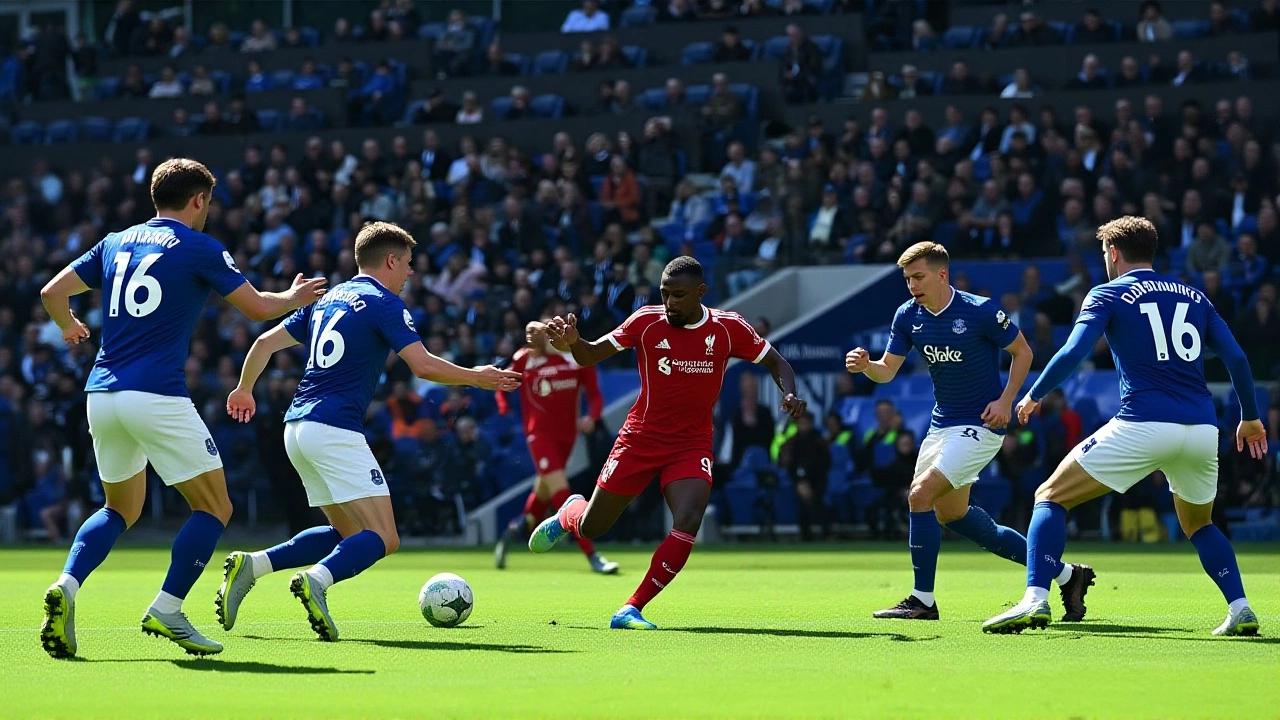
When Mark Jones, sports journalist for the Liverpool Echo, dropped the latest fixture analysis on social media, it wasn't just another schedule update. It was a potential tactical headache for one side and a welcome breather for the other. The headline? "Liverpool to face double derby issue as Everton get Premier League fixtures boost." In the high-stakes world of the Premier League, where margins are measured in seconds and rest days, this scheduling quirk could prove pivotal.
The news broke via the Liverpool FC News account on X (formerly Twitter), handled by @LivEchoLFC. While the full article details remain behind the paywall or in the main publication, the implications are clear. Liverpool Football Club is staring down the barrel of a congested period involving their city rivals, while Everton gets a strategic advantage in their calendar. Here's the thing: in modern football, the fixture list isn't just a diary; it's a weapon.
The Anatomy of a Fixture Boost
So, what exactly does a "fixtures boost" mean? It's not magic. It's math. For Everton Football Club, currently fighting to cement their status in the top flight, any scheduling advantage is gold. A boost usually means better spacing between games, avoiding back-to-back weekends with heavy European travel, or facing weaker opponents during crucial run-ins.
Turns out, the Premier League's algorithmic scheduling has handed Everton a softer landing pad in key periods. Meanwhile, Liverpool faces the opposite. The "double derby issue" suggests that Liverpool might be forced to play against Everton twice in quick succession, or perhaps sandwiched between other high-intensity matches. This isn't just about playing one team; it's about the psychological and physical toll of preparing for the same opponent repeatedly without adequate recovery time.
Merseyside Derby: More Than Just a Game
To understand why this matters, you have to look at the history. The Merseyside derby Liverpool is unique. Often called the "Friendly Derby," it lacks the violent sectarian undertones of some other UK rivalries, but don't let the name fool you. On the pitch, it's brutal. Since 1894, these two clubs have met 293 times. Liverpool leads with 124 wins, Everton has 83, and 86 ended in draws.
Since 1962, both teams have played each other at least twice every season in the top flight. That consistency breeds familiarity. Players know each other's habits. Coaches study the same defensive lines week after week. When you add a "double" element to this—whether it's two league games close together or a cup tie mixed in—the preparation becomes exponentially harder. You can't scout an opponent who plays like your own training partner.
Why Liverpool Fans Are Worried
Liverpool fans are used to winning. But they're also acutely aware of the physical demands placed on their squad. With a busy European calendar often looming, every domestic game counts. If Liverpool has to expend significant energy on Everton early in a congested period, it leaves them vulnerable against other Premier League giants.
Here's the twist: Everton, under pressure to avoid relegation battles or fight for mid-table stability, will likely approach these matches with heightened intensity. They know Liverpool is tired. They know the schedule is tough. And they intend to exploit it. The "boost" for Everton isn't just about rest; it's about morale. Knowing they have a favorable draw gives them confidence going into Anfield or Goodison Park (or the new Bramley-Moore Dock stadium, depending on the timeline).

The Bigger Picture: Scheduling Chaos
This situation highlights a growing frustration in English football. The Premier League's fixture congestion is no secret. Clubs complain about it annually. Yet, here we are again, with arbitrary scheduling decisions creating uneven playing fields. Is it fair that one club gets a "boost" while its neighbor gets a "double issue"? Probably not. But it's reality.
For managers like Arne Slot (at Liverpool) and Sean Dyche (at Everton), this is a chess match before the first ball is kicked. Rotation policies, injury management, and tactical flexibility will be tested. The team that manages its resources better will likely come out on top. And right now, the calendar seems to favor the Toffees.
Frequently Asked Questions
What is the "double derby issue" for Liverpool?
The "double derby issue" refers to a scheduling scenario where Liverpool Football Club is required to play against their city rivals, Everton, multiple times in a short span. This could involve consecutive league matches or a combination of league and cup ties, leading to reduced recovery time and increased physical and mental strain on the squad.
How does Everton benefit from this fixture arrangement?
Everton receives a "fixtures boost" because their overall schedule allows for better rest periods or less congested timelines compared to Liverpool. This advantage enables better player rotation, reduced injury risk, and higher freshness levels when facing Liverpool, potentially giving them a competitive edge in the Merseyside derbies.
Who reported this fixture analysis?
The analysis was reported by Mark Jones, a sports journalist associated with the Liverpool Echo. His article was promoted on the Liverpool FC News X account (@LivEchoLFC), highlighting the contrasting fixture difficulties for the two Merseyside clubs.
What is the historical record of the Merseyside derby?
As of the start of the 2023–24 season, Liverpool and Everton have met 293 times since 1894. Liverpool has won 124 matches, Everton has won 83, and 86 matches have ended in draws. The rivalry is known as the "Friendly Derby" due to shared community ties, though it remains fiercely competitive on the pitch.
Does the Premier League control the fixture list?
Yes, the Premier League organization compiles and releases the official fixture list for all 20 member clubs. The scheduling process uses algorithms to balance home and away games, minimize travel, and accommodate broadcast requirements, which can sometimes result in perceived advantages or disadvantages for specific clubs.