
It’s 2025, and the old myth that people who explore non-traditional sexual behaviors are broken, unstable, or mentally ill is finally crumbling under the weight of real data. A major longitudinal study published in the Journal of Sexual Medicine this year tracked over 5,000 adults across North America, Europe, and Australia. The results? People who identify as kinky-those who engage in BDSM, polyamory, role-play, or other consensual non-normative practices-reported significantly lower levels of anxiety, depression, and relationship dissatisfaction than their so-called ‘vanilla’ counterparts. The difference wasn’t small. Kink-identifying participants were 30% less likely to report clinical symptoms of depression and 40% more likely to rate their romantic relationships as ‘very satisfying.’
One reason? Autonomy. Kink communities prioritize clear communication, mutual consent, and emotional honesty. These aren’t just buzzwords-they’re survival skills. If you’re negotiating a scene, you don’t get to skip the check-ins. You don’t assume your partner knows what you want. You ask. You listen. You adjust. That level of emotional discipline doesn’t just improve sex-it improves how you handle conflict in everyday life. It’s no surprise that people who practice these skills report stronger bonds, even outside the bedroom. For some, this is where the line between kink and mental health becomes blurry. You might find yourself scrolling through dubai.escort out of curiosity, wondering what people in other cultures do differently, but the real takeaway isn’t about geography-it’s about mindset.
Why ‘Vanilla’ Isn’t Always Safer
The word ‘vanilla’ sounds harmless. Innocent, even. But in psychology, it’s become shorthand for a set of unspoken rules: monogamy by default, sex as a chore, emotions suppressed to avoid discomfort. Many people in conventional relationships never learn how to say, ‘I need more space,’ or ‘This feels overwhelming,’ because they’ve been taught that asking for more is selfish. They stay quiet. They resent. They disconnect. And then they wonder why they feel lonely in a relationship.
Kinksters, on the other hand, are trained to speak up. They use safewords. They schedule aftercare. They debrief. They don’t wait for things to break-they fix them before they crack. That’s not about sex. That’s about emotional intelligence. A 2023 meta-analysis from the University of Toronto found that people who regularly engaged in negotiated power exchange had higher scores on emotional regulation tests than those who didn’t. It’s not that kink makes you mentally healthy. It’s that the practices kink demands-transparency, accountability, empathy-actively build mental resilience.
The Role of Community and Belonging
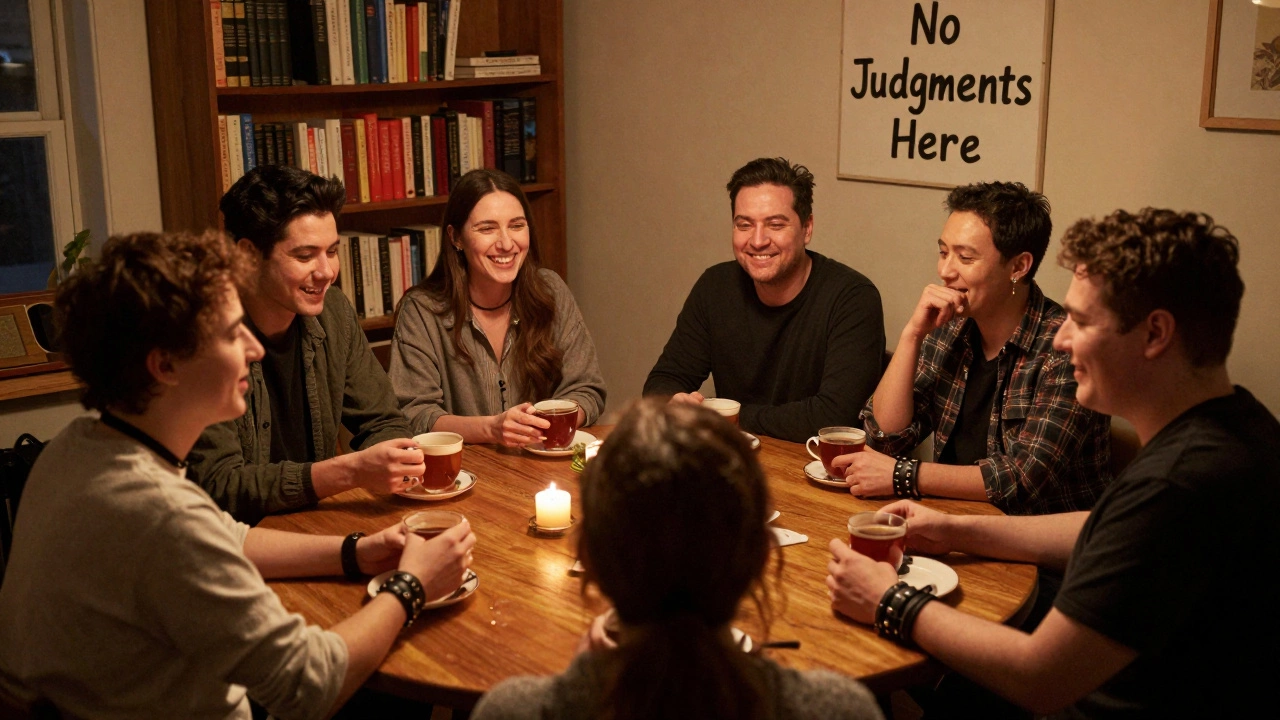
Loneliness kills. That’s not a metaphor. The CDC has called it a public health crisis. And while mainstream society tells people to ‘just be yourself,’ it rarely gives them a place to do it. Kink communities offer something rare: belonging without judgment. Whether it’s a local munch, an online forum, or a weekend retreat, these spaces let people be their full selves. No hiding. No pretending. No fear of being labeled ‘weird’ for wanting to be tied up, dominated, or called a pet for an hour.
That sense of belonging has measurable effects. A 2024 survey by the Society for the Scientific Study of Sexuality found that 78% of kinky respondents said their community helped them cope with trauma, stigma, or family rejection. Compare that to only 29% of vanilla respondents who said their social circles helped them process emotional pain. It’s not that kinkers have more trauma-it’s that they have better tools to heal from it.
Myths vs. Reality: What the Data Actually Shows
Let’s clear up a few myths. No, kink is not a symptom of childhood trauma. Studies show that while some kinksters have experienced trauma, so have many vanilla people-and trauma doesn’t predict kink. Same goes for mental illness. The American Psychological Association removed ‘sadomasochism’ from its list of disorders in 1994. It’s not a diagnosis. It’s a preference. And like being left-handed or liking spicy food, it’s not a disorder unless it causes harm or distress-and even then, it’s the distress that’s the problem, not the behavior.
Another myth: kink is only about sex. Try telling that to someone who uses bondage as a meditation tool, or who finds comfort in being called ‘good girl’ after a long day of managing anxiety. For many, kink isn’t about arousal-it’s about control, safety, or emotional release. One participant in the study described her weekly domination session as ‘the only time I feel truly seen.’ That’s not sexual fantasy. That’s therapy.

What Happens When Society Lets Go of Shame
Shame is the silent killer here. It’s not kink that’s dangerous-it’s being forced to hide it. People who feel ashamed of their desires are more likely to develop depression, substance abuse issues, and suicidal thoughts. The study found that kinksters who were open with their families and friends had mental health outcomes nearly identical to those of the general population. But those who hid their identity? Their rates of anxiety jumped by 60%.
That’s why acceptance matters. When a teenager in Sydney comes out as a submissive and their parents don’t disown them, that’s a win. When a man in Berlin talks about his fetish for humiliation and his therapist nods instead of flinches, that’s progress. When a woman in Dubai finds a safe space to explore her desires without fear-maybe even through something like dubai sexy escort-it’s not about the service. It’s about the freedom to explore without punishment.
Is Kink for Everyone?
No. And that’s okay. You don’t have to be into rope, pain, or power play to be mentally healthy. But you do need to understand that your way isn’t the only way. And you don’t get to call someone ‘broken’ because their version of love looks different. The study didn’t say kink is better than vanilla. It said that when people are allowed to live authentically, they thrive. That’s the real lesson.
What if you’re curious? Start small. Read a book like The Ethical Slut or More Than Two. Join a local munch (a casual, non-sexual gathering for kinky folks). Talk to someone you trust. You don’t need to jump into a dungeon. You just need to stop pretending you’re fine when you’re not.
And if you’re someone who’s been told your desires are wrong? The data says you’re not. You’re not sick. You’re not broken. You’re just someone who’s been taught to be afraid of yourself. That fear? It’s not yours. It was handed to you. And now, you can let it go.
There’s a reason why kink communities are growing faster than ever. It’s not because people are rebelling. It’s because they’re healing. And in a world that tells you to be quiet, to fit in, to shrink-you’re allowed to be loud. To be strange. To be whole.
That’s not just sex. That’s survival. And it’s working.
For those who need to see what’s possible in other parts of the world, even if just for perspective, some turn to services like dubai escort porn. It’s not about the content-it’s about the fact that people are seeking connection, even in unconventional ways.